Sunday, December 15, 2013

The Opposite of Love is not Indifference, it's Hatred.

I was having a conversation with a friend about love and its opposite, hatred. My friend was looking for an argument, so he decided to get smug with me and said, "Well, you know, the opposite of love isn't really hatred. The opposite of love is indifference."


This blog is written in response toward this comment.
For a while, I believed that the opposite of love was indifference for two main reasons: 1) both love and hatred are passionate emotions whereas indifference is a lack of emotion and 2) love and hatred can coexist in someone at the same time toward the same subject.

However, it's very simple why I came to believe that the opposite of love is hatred. There is no larger boomerang of emotion than going from love to hatred. Loosely speaking, love is wanting what is best for someone else, whereas hatred is wanting what is worst.  It's the difference of going out of your way to do something nice for someone and going out of your way to do something horrible to them.

Yet you can be angry with someone without hating them, and you can do good for someone without loving them. No one action, moment, or emotion proves that these exist in a relationship, but I believe that both are an active and pursued choice. 

A lack of love (indifference) does not mean hatred; my friend was right about this. And this is true for most things that have opposites. A lack of speaking the truth may just mean a person is being silent. A lack of goodness does not make a thing evil. A lack of the color red does not make green. If you're not moving up, that does not mean that you are moving down.

Indifference falls into a similar category; it is an intentional (or unintentional) thoughtlessness and passionless neutrality.

As an aside, this is not to say that indifference is a bad thing, actually, hatred is not always a bad thing either.

All people are called to hate what is evil and love what is good. We should want the worst for bad things and the best for good things. This is how both of these can exist toward the same person; we can admire the best parts of them while hating the worst. Growth often comes from such tensions, but the struggles come from when we hate or love the wrong things.

Sometimes, struggles also come from loving (or hating) something too much.

My friend wrote a blog (that everyone should read, hence the link) about the myth of Icarus. He points out that we live in a generation unlike Icarus: where Icarus flew too high, we refuse to take our eyes off the ground. I don't mean to disagree with his point, but just as we are opposites in most ways, I find it important to take note of the traditional moral for the story: unkempt ambition is dangerous to ourselves. Just as it is wrong to have wings and refuse to fly, so it is also wrong to have wings and aim too high.


It is the moderation and focus of our virtues that is important here. We can definitely have too little love for something (neglect), but we can also have too much love (stalkers/need-for-restraining-orders). Likewise, the same is true for hatred. As with Icarus, the problem is not the passion, it is where it is being aimed. Temperance and Wisdom should be our guides.

But I digress.

If indifference is the opposite of love, why is it that the opposite of indifference is not love?

If indifference is just thoughtlessness and passionless regard toward a particular object, then its opposite would not be love, it would be simply caring (which I will refer to as vivacity). As such, the opposite of indifference does include love, but it is not simply limited to love. It includes hatred too, as well as any other feeling.

The opposite of saying nothing is saying something, which can be either true or false. The opposite of doing nothing is doing something, which can be good or evil. The opposite of black is white, which technically contains all other colors. And if you are not moving, then the opposite of that would be to move in any given direction.

Yet, in a weird way, indifference can also work with love or hatred.

I've known people who have chosen to have no opinion about something because they did not think the topic was important enough to offend someone. I've known other people who have done the same thing because they knew that having no opinion was the most offensive thing they could do. The same can be said about vivacity. 

I've learned to stay out of certain things because it is just not my business, however, when it becomes my business, you can bet I'll care about it.


To put it another way, I am called to be indifferent about some things but I am also called to be passionate about others. However, I say this cautiously, because I know that I can often be wrong.

An opposite is not a lack of something, it is using the same object in a contradicting way. It is moving over from one camp to the other; it is being on the other side. Granted, life is so complex that even people on the same side do not always agree, but variety is the spice of life and I wouldn't have it any other way.

If you have ever had someone who loves you begin to hate you, you know what I mean. In some ways, you wish they would be indifference. Indifference would be a reprieve.

May Wisdom and Mercy guide my steps.

Monday, November 25, 2013

Trilogy on Size. Part 2: Feeling Small

I ended Part 1 of this trilogy with the question "What do you do when you become the giant?"

Anyone who is reading this blog is likely a giant right now, at least in proportion to something (or someone) else. In the first part, I mentioned how children feel small in comparison to adults, but I'll spend some time giving more examples.

Some of us have personalities that are "larger than life" that may make people feel insignificant. Some of us are in positions of power that affect the well-being of another human being. Some of us are trusted with secrets that are so big that we could ruin one of our friends if we let it out. Hell, I've heard of people ending relationships because the person that they are with is too "good" for them.

It's hard to be around someone who makes you feel small, yet it's even worse when that might be the right way to think about it.

Most of us have a problem with wanting to be bigger; we are all giants when compared to someone else. All of us are huge in some way, and our hugeness scares those smaller than us.

I want to confess the moment where I learned this to be true in my life. I say confess because it is a moment I'll never forget.

When I was a child in daycare, I had instructors who liked to jokingly be rough with the children. It was not uncommon for them to punch us playfully, give noogies, terrorize us with Indian burns, or frighten us with the threat of these things. But I was never afraid of my instructors. We all did it and knew that it was all joke. In reality, we were deeply loved. It was all done in good humor, and our instructors proved that to us by putting bullies in their place and standing up for us when we needed a hero.


This is why I felt myself to be extremely blessed the first time I got hired as a daycare instructor; I wanted to be one of the playful big guys that I loved.

Yet a few months into my job, I got called into the principal's office. My daycare supervisor was sitting there with the principal. Evidently, a little girl had gone home and told her dad that she was scared to go back to school because I had threatened to beat her up. I don't remember doing this, but I would not have been surprised to have said it. As I mentioned before, this rough kind of joking play was what I was raised on. I explained how I would never hurt a child and my boss supported me, but the principal thought it best to remove me from that position because the father had threatened to remove his daughter from the school permanently if I was still there.

At the time, I thought this was an overreaction, both on the part of the parent and the part of the child, but now I don't think so. The truth of the matter was that I had not realized how big I had become. I was 16 at the time yet still thought of myself as a child; who could possibly be scared of me? Ironically, this was also the time when I started to play rugby because I was considered a "big guy".

At the time, I never put two-and-two together and felt cheated out of a job. But I realized how I must have looked to the poor child. I scared a little girl because I failed to realize how huge and menacing I looked to her.

As I mentioned before, most people have a problem with wanting to be too big, but I lived with the desire to want to be smaller. I did not want to matter more, I actually wanted to matter less. When you're big, the world is on your shoulders and a tiny, miscalculated step can crush someone you care about. When you're small, you can't hurt anyone.

For me, it was always better to not take a risk than risk hurting someone. Better to deflect responsibility than to misuse it. Better to have not loved than to have loved and lost. Better to be small and overlooked than large and feared.

But this is a bad response. 

If you have not read East of Eden, you should stop reading this blog and go read that book instead, because it is better. However, if you are alright with me spoiling it a little, read on.

You are in a tough spot when you find yourself relating to Cathy in the book. Cathy is a very cold character (to put it mildly) throughout the story, but her death scene is tragic. She is terrible, cruel, and remorseless, yet as she dies, she remembers her childhood and her imagined friendship with Alice from Wonderland. She reflects on how she always wished she could shrink down with Alice so they could play together, away from everyone else.


From the start of the book, Cathy was described as knowing that she missed something that other people had. Some spark was not in her. This made her very capable to deal with the world, but she never felt like she was a part of it. Survival was her only instinct, but someone who only lives to survive cannot be happy. When she took her own life, it was because she felt overwhelmed with everything that was happening with her. 

The world was too big, and Cathy could not cope with it.

When Cathy's life gets too big for her, she becomes cold and calculating to deal with it, but inside she just wishes that it never got big. She does not want to be responsible. She knows she cannot handle it. Yet this deep feeling of detachment and smallness brings her to do horrible things without realizing they are bad. 

She abandons her newborn children because she is worried that they will shackle her down. On another level, I think she abandons them because she knows she cannot be a good mom.

On one hand, being smaller makes your life easier, but on the hand, it hurts people just as much as the giant.

Growing up is inevitable, but because their is no actual way to grow small, we're sometimes left as giants who feel small. I felt small, which made it possible for me to terrify a little girl. That was my mistake. Cathy wanted to be small, so she abandoned her children without a second thought. That was her mistake.

We all become giants at some point, not matter how much we wish that was not the case. So how do we cope?


*A quick aside: people still have 5 days to do the prose and poetry challenge. You should submit something!

Saturday, November 9, 2013

Untitled Prose By Meg

Hey, Tito. It feels weird that you’ve requested guest posts without specifying a topic. Not even an opening question. So my question becomes: 

What is so important to me to say that I have to post it on someone else’s blog?

Tito, what I like about your blog is that it reminds me of my beginning-Torrey days, when sessions were short and ideas were big and the energy I felt was like a kid’s first sugary iced coffee. In Narnia. You have kept pursuing the Logos, combining a child’s innocence with the experienced perseverance of a sage. You’ve kept your wonder.

One of the things that remind me of that joy is missions. I read an account by a friend of mine who visited the Turkana nomads from the desert in the north of Kenya and how she told them about the God of the Christians for the very first time. My heart sang.

The Holy Scriptures teach us that each nation has its own angel (cf. Daniel 10:13). In the Scriptures, “nation” is ethnos, which really means “people group.” Also, each Christian has their own guardian angel, who constantly sees the face of God (Luke 18:11). I thought about this as I read about the purity of heart of the Turkana people and their way of living in the spirit of the Old Testament, so that they were prepared to receive the words of the evangelists. The angel of the Turkana people must be somewhat different than the angel of the Cherokee people, for example—embodying the finest characteristics of these people, even as they change over the years. And that angel must have been interceding for them and leading them towards God.

I wonder, at least, if these extrapolations might be valid. Angels are wonderful.

Word Count - 300

Wednesday, November 6, 2013

The Courts of Heaven By Tito

Like Beatrice was for Dante
you have been for me.

I hate all these modern re-tellings
that cast these two as lovers.

They're wrong.
They're self-serving.
And worse,
They miss the point.

I may never "have" you
(And what a gross way to phrase it)
Thinking of you as a possession
Makes me sick

I cannot even say "I love you".
Now, if a man loves a woman
It must involve sex.

I want you
but I don't want to "have" you

Not to say you're not beautiful
"Having" misses the point.

You're my Beatrice
You're my courtly love
You're my vision of the courts of Heaven

I want to be near you
because to be near you
is to be close to God.

I may never again gaze on your shining countenance

You are free
You go where He wills.
You serve not me
and I serve not you

But you've been unto me a vision
I'm dedicated to that cause.

I bring this to my memory
so I might remember crystal clear.

Beauty is not to be possessed
but set free
Not to be contained
but to follow
Not to be self-serving
but to serve

Because through you, living in the favor of God
I am guided to the courts of heaven.

Word Count - 214

Untitled Poem By Anonymous

we had
the talk,
and at the end of it we decided
that we were
just friends.

and because i’ve grown up a lot
since that time with the girl who cheated,
i was really okay with this conclusion.

more than anything,
i want to be able to keep
digging to the depths of who she is
and never,
never
stop getting to know her.

it’s a privilege to do that.
more, maybe, than having her
for my own.
whatever it means to “have” someone.

i want to be
just friends,
in fact, the qualifier “just”
that resides on the front
of that statement
does not do the wonder of the project
justice.

friendship is deep and heavy and
more than what i could ask for,
but she uses it as a limiter for
what we could be.

and thus, i’m again
confused.
because she doesn’t seem to limit
anything.
she laughs too hard, she
touches too frequently, she
hugs too tight
for me to believe that anything about us is
limited.

Word count - 172

Untitled Prose By Anonymous

I never know how to start writing anymore.  It's as if the creativity I once possessed has deserted me like the simile I forgot to put in the back half of this sentence.  My ideas are fragments, truncated thoughts cut down by my lack of giving a shit.

I worry a lot: that my writing woes are indicative of deeper problems, that this transition is too forced, that meta-conversation about my writing doesn't magically improve it.  This goes away if I just close my laptop.  No more words staring back at me, no more thoughts I have to wrestle with. Problem solved.

There's the rub.  I heard that if I persevere, eventually I'll get somewhere.  But with all this perseverance, I keep walking past my problems, hoping that brushing things off will eventually make me happy.

"It's okay, man.  You won't be fat forever and you're not that gross and I'm sure people find you charming regardless."

"It's okay, man.  Don't worry about falling in love and having a family.  It'll happen someday.  You're not falling behind.  So what if everyone you know is already in love and getting married and doesn't have to go to sleep alone every single God-damned night?"

"It's okay, man.  By the time you graduate, you'll be sufficiently well-read.  You'll know when the Enlightenment was and what Man Who Was Thursday is actually about, and your colleagues won't think you're a fraud."

"It's okay, man.  No one knows how much of a fuck up you are."

I finally fall asleep, dream of nothing, and wake up tired.  After a groan and a stretch, I look in the mirror and kid myself into thinking that I'm doing anything good and that life will get better and that this bullshit stream of consciousness counts as prose.


Word count - 299.

Monday, November 4, 2013

Prose and Poetry Challenge

We interrupt the current trilogy in process to bring up an important announcement.

I made this blog to get feedback on my writing and my thoughts, but it has become something more personal. Based off the amount of traffic this gets, I'm clearly not in this for the fame. 

I write because I have something to say. It's not that what I have to say is important, I am under no illusion that my writing changes any lives other than my own. But my writing changes my life.

I want to extend this opportunity to anyone who wants to give it a shot. I know part of the reason I started my whole blog was because of a challenge, so I'm offering everyone reading this a challenge.

For the rest of this month, I'm opening my blog to other people's writings, specifically prose and poetry. I will post anything people send me so long as it is not blatantly offensive. If you want your name with it, first name only, last name only, a pseudonym, or for it to be kept anonymous, just let me know. If you don't tell me, I'll assume you want to be anonymous.

Each entry will become a blog post, and I'll post the word count at the end. Submissions must be below 300 words and sent to narcandgoldy@gmail.com. I'll respond to you in email after I've posted it, just letting you know that it's up. 


I typically post blogs on my Facebook, but I will not be doing it with these unless you ask me to. 

I'll still be updating my blog and the current trilogy, but this is a side project that I wanted to do. I hope you send me something. I genuinely do.

-Tito


-295 words

Saturday, October 26, 2013

A Trilogy on Size. Part 1: Hugeness.

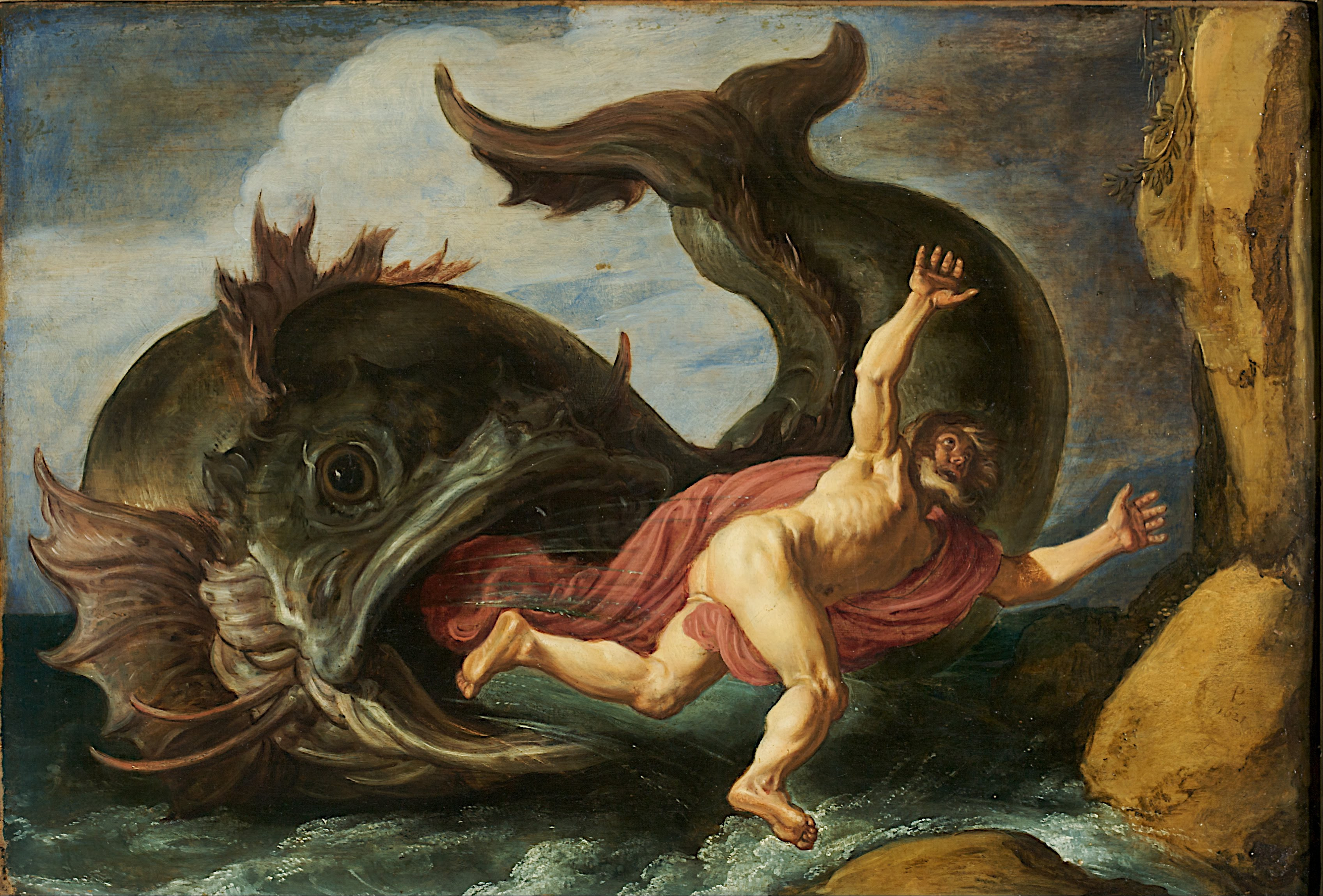
When I was young (and I mean really young), I used to play a game with my brother based on the story of Jonah. I think I was around 4 or 5 years old, and I wonder if my brother even remembers playing it with me. The game functioned very similarly to tag. The person who was the whale (or big fish, if you prefer) was "it" and, if he tagged you, you had to go hide under a bed and pretend like you were eaten. 


This is the earliest memory I have of being afraid of something huge. 


Hugeness and a fear of hugeness are difficult sentiments for me to explain because fear has become something to be explained away rationally. "You were just scared of the whale (or big fish) because you were worried about it hurting you," would be the typical psychologist response to it. But that wasn't it. The whale (or big fish) was simply huge, and I did not want to be close to it.

I felt something similar when I went whale watching in Hawaii. When the whales were far away, I thought they were pretty cool, but when we got into the water and they surrounded our boat, I just wanted to be back on dry land.

In this way, I can understand Captain Ahab.


Pause for a moment and see if you know what I'm talking about. Remember what it was like to be afraid of something big and simply not wanting to be near it. Don't try to explain why you don't want to be near it, because that's not the point. The point is that it is gigantic, and kind of grotesque for being gigantic.

This wariness of hugeness is probably the reason why, as a kid, it was impossible for me to be "friends" with teachers, or even kids much older than me. Sure, I wanted the teacher around if I was being bullied or needed help; they were our giant protectors. But when it came time for me to choose what I wanted to do, I never chose to be around them more than I had to be.

"But that's because they did not want to play the games you wanted to. Grown-ups just didn't get it." Does anybody still think this? It's not like my childish games were so sophisticated that adults didn't get them; they were too boring for them to be interested in them. I didn't want them around because they were grown-ups and I was a kid.

They were too big for my games. 

Do you remember what it was like for you to get lost in the world of grown ups? Looking back, I wonder how that even happened to me. It seems unfeasible to me that I ever managed to get lost in Target or Disneyland, but, when I was a kid, these places were too big. They seemed to have some unspeakable rules or patterns that the grown-ups around me could follow, but were unknowable to me.

And when I got lost, what could I do? I was smart enough to know that not all grown-ups were good people, but I had no way of telling the good grown-ups from the bad. These signs that were clear to the giants around me, but I was too small to notice them. All I could do was hide. Somewhere small. I'd go into the world within the shirt hangers where no grown-up could go. In this world, this small world, I could feel comfortable even though I was lost. 


There were no giants there, just me in my little world.

Seeing something big is scary. It should be. Think of the phrase "larger than life". Isn't that horrible? Something so big that it is more looming than life itself. It's an assault on your senses; namely, there is too much for you to sense. You can become overwhelmed by how much you can focus on. You know that you have to be able to focus on the whole thing at once to understand it, but you cannot do that, yet you keep trying


"It's a Hell of a thing."

I think why God does not reveal Himself, in all His glory, to the world is because we cannot handle it.

Satan, however, is willing to do that. I just finished reading Inferno and the picture of Satan and the Titans in Hell is fresh in my mind. I'll be honest, it was emotionally hard for me to put myself in Dante's shoes and stand gaping at these terrors. How awful it was to climb the flank of Satan. What do you do with that, except want to run away? How can you look at something huge and not be afraid?


This isn't meant to put down tall or burly people, because they really aren't the kind of big I'm talking about. As a person of average height, I don't get weirded out by my 6 ft, 9 in tall friends. I mean it more something like this.

As an adult, I worked with kids for a while, but before that, as a child, I was a frequent member of our school's daycare. Teachers and daycare workers were always scary. As I grew up, they stopped being scary. I've been afraid of people who, now, I can make fun of. The 5 ft, 90 lb was a terror to me as a kid, but something small and delicate to me as a man. 


When I was a child, what scared me was that she was a grown-up, and when I became a grown-up, she stopped scaring me.

But when I saw her as a child, she was huge. She was a giant. A titan. An assault on my senses. Too much to take in.

This is the first blog in a new trilogy, and all I'm aiming to do with this first part is to point out this feeling. I want you to remember what it was like to be around something huge. The feeling of wanting to run away. How did you react to the fact that their are huge things in the world? What has it done to you? How did it change you?

And what do you do when you become the giant?

Tuesday, October 1, 2013

What I Learned From Pokémon (with Kyle)

Tito (I'll be red): Last time I wrote one of these blogs, I talked about how playing Legend of Dragoon taught me life lessons. Pokémon, a franchise that I've put a staggering amount of time and money into, was another of these formative things that taught me early lessons.

Between Pokémon cards, Pokémon plush figures, Pokémon movies, Pokémon strategy guides, and, of course, Pokémon video games, I think no single thing other than school and sleep took up more of my time. It was so pervasive in my life that, like the chicken and the egg, I cannot look back and say what came first for me: the video game or the T.V. show. There was Before Pokémon (BP) and After Red and Blue (ARB). As much as I’m sure my parents did not want me to be formed by it, I could not have invested so much time without it paying some dividends, for good or bad.

As obsessed as I was with it, there were parts of Pokémon that I did not love at the beginning. I liked the Pokémon because I thought they were cool….and secretly hoped they were real and just in hiding….but there were aspects of the game I did not too seriously. My friend Kyle was (is) a Pokémon Maniac (Pokémon reference!), so I asked for his help in writing this.

Kyle (Kyle is blue...get it?!?!): And so I, Kyle the Pokémon Maniac, answer back. Yes, I too was as consumed by the adorable and epic nature of teh Pokeymans. They appealed to my every sense (except for taste, though I have always wanted to eat a Jigglypuff) and therefore to my very heart. But unlike my good friend, these monsters evolved into more than simply pets. They became my greatest weapons.

Have you ever watched Pikachu hurtle through the air as he Volt Tackles a Taros? Have you ever heard the blood-curdling war-cry of an enraged Scyther right before it disembowels a cowering Poliwhirl? Teh Pokeymans isn’t a world of fun and games. It is a land of violent clashes where lives, money, and reputations are at stake in every battle. Welcome to the world of glorified dog-fighting. MUAHAHAHAHAHAHA!

1) Competitive spirit

But in all seriousness, the reality of Pokémon lies far outside the realm of peace. Every Gameboy adventure sits firmly on the bones of the Pokémon you methodically destroy to rise to the top. Brother fights brother. Poke-families are torn apart. The bodies of the slain lie thick throughout the tall grass, fall silent in the darkest caves, or bob on the oceans’ surface. And all for what? More levels. More moves. More experience. More EVs (Only  those who are truly obsessed with Pokemon know what these are). More evolutions. More everything so a trainer can fight more often and with more success. To put it succinctly, the entire system of Pokémon is a pursuit of martial excellence. I picked up this sentiment at around 12 and decided to truly become a Pokémon master.

My games were no longer a languid adventure with the goal of filling my Pokedex with Poke-variety. Instead, I marched on toward the Pokémon League to become Champion. Weakness was cut away. Softness was brutalised into hardened, veteran resolve. My Pokémon became warriors, servants of a new bushido way: victory at all cost. Those who died to satiate my blood-lust were just cogs in the mechanical meat-grinder of expediency.


Unfortunately (inevitably), this Poke-mindset sunk deeper into my life than I thought. Although I did learn many skills through the many Pokémon games: chess-like predictions, cohesive team-compositions, mathematical calculations, researching tools, meticulous planning strategies, an iron-will/determination, creative solutions, a desire for success, and the list goes on, I also taught myself how to think competitively far too often. Nothing was a simple experience or artistic expression; it was now a game, but not a game without consequences. Everything mattered because there was always a loser and a winner. Talking to my mom became a delicate dance of wit. Getting straight A’s became a goal that would even include cheating just for the result of victory. I had let teh Pokeymans infect my brain.

I titled this section “Competitive Spirit” because, though I certainly do not advocate my friend’s brutality and blood-lust toward his adversaries, much less his gladiatorial treatment of beloved Pokémon, I cannot deny that the “world of Pokémon” has this side to it. 

When I had turned 12, I became interested in putting together interesting, fun, yet battle-savy teams of Pokémon. However, when I came up with these teams, it was never solely a matter of how powerful or useful these Pokémon were. Of course I wanted a team that could win (and diversity is important for that), but I never bothered to look up strategies and find out what the “pros” were doing. Quite simply, I was loyal to some Pokemon for personal reasons, yet disinterested in others.

I still approach video games with this mindset.

Strategy guides were books of poetry containing the nuances of a
Pokémon soul, not a roster full of different dog-fighters meant to dominate over the other teams. A battle was the creativity of my opponent in a dance with my own, not an excuse to brutalize a fellow trainer.


In order to give credit where it is due, it might have been my brothers who saved me from this mentality. Whenever I got too intense, they would punish me by refusing to trade Pokemon. Or they would just go run to mom or dad and tell on me. Or it could have been that, at some point, I learned to love these little critters. 

I still remember crying during the Pokémon TV show when Ash (the protagonist of the show) let his Butterfree return to the wild. The two had been together since the start of his journey!


(Evidently I'm not the only one who felt this way)

Catching and training Pokémon is a responsibility of raising Pokémon while building relationships, and that’s why doing things like breeding Pokémon in order to find the perfect specimen for battle was repulsive to me.

Yet Pokémon is a game that you can have either mentality, the master or the friend, and still need to battle. Competition is necessary for the warriors at heart as well as the poets. The strategists and the dreamers. The fighters and the lovers. And as much as I wish determining the “correct” mentality was as clear as choosing between red and blue version, I must also recognize that I come from a “soft” perspective. The warrior mindset of my friend certainly does champion it’s own kinds of virtue, and competitive spirit sharpens both the lover and the fighter.

I may have come across as a murderous, slave-driving manbearpig (Just a bit...), but I can assure the public that I am no such thing. Yes, teh Pokeymans may have inspired and encouraged a violent streak in my psyche, but that is only because these games were inherently violent. But that isn’t all they were. As my colleague so delicately and expertly described, Pokemon is a game built on relationships. While some, *ahem* me, may have wanted those relationships to revolve around the defeat of others, most of my friends and fellow trainers sought after an adventure of a lifetime. What is better than to rise to the very pinnacle of Poke-achievement with your team of best friends? Not much.

2) Cooperation

Upon further reflection, I think one of the major reasons I trained so hard was because I didn’t want my Pokemon to fail. If they failed, I failed them. They couldn’t train themselves. And I couldn’t walk through tall grass without them. Our symbiotic relationship thrived in a harsh environment. Without anything to lose, we wouldn’t need each other. Interestingly, these games do reflect pieces of reality between its pixels. When you make friends, it is rarely the result of happenstance (wild encounter vs trade). And if you want that friendship to strengthen and mature, there must be effort (training) and sacrifice (trips to the Pokecenter) constantly pumped into it. Without work, a friendship will stagnate or drift away, much like a Chansey left in the PC for too long.


As a 23-year old married fellow, I can say that Pokemon is not among my top priorities any more. It hasn’t been for years, but the excitement for battle and new Pokemon is still there. Memories of epic catches or perfect teams may flit to the forefront of my mind unexpectedly. But if anything, that doesn’t steal away my other priorities. I believe the same could be said for my friendships. Now that I have a woman to attend to (possible metaphor for owning a Gym? Love Gym?), I know my relationships outside of my spouse will take the backseat for a bit (or maybe forever...I’m still new to this whole marriage thing). But I do have the memories, experiences, and adventures locked away in my mind (She’ll never understand the Pokémon side of you as well as I do). And just like picking up a Gameboy and hitting the Continue button, rekindling a long-neglected friendship can be as easy as pulling old Pokefriends out of the PC and taking them for a spin, but only if you had put the time into them.

I guess what I’m starting to realize is how every bigger and better thing requires a small foundation to rest on. Rich friendships that last for a lifetime often occur only after you’ve had dozens of friends since your childhood. Being able to deeply love and respect a woman in marriage isn’t an easy thing. You need to love and respect your mother, sisters, lady friends, and even girlfriends before that can happen. And, since this is a Pokemon blog, you can’t beat Gary and transform into the League Champ without working your way through caves, surfing over seas, conquering gyms, and buying 1,000 too many potions. Pokemon trained me to care about my friends, even if they were digital monsters. They meant something to me and the fact that I spent literally hundreds of hours invested in their training proved it. As silly as it may sound, I not only grew up inundated in Pokemon, I grew up because of Pokemon.

3) There are No Shortcuts to Relationships

I think this might be a good time for me to clarify a few things. Kyle's character matured because of his devotion to the game, found in any good Pokemon player, and clearly, he has always had a deep love for the team that he’s worked with. Me, I started down a different path, and it was a path that almost cost me my love for the game. I was seduced down the wrong path at a young age, and had to claw my way out of it. 

I walked a forbidden road: the wide-road known as “cheat codes”.

Don’t get me wrong, I loved Pokémon, but, at some point, I learned the cheat code for Red and Blue versions: The Missing No. All who've ever played these versions know what this is, because it was the path to an easy Pokemon game. It was the shortcut to getting all your Pokémon to level 100 and catching any Pokémon you want. It was a glitch that made you a god.


I've learned though. What good is it if you catch all 150 Pokémon, defeat Gary in record time, yet have not love?

There was a time, when the Gold and Silver versions came out, that I contemplated avoiding Pokémon. The game designers discovered the glitch and fixed it, and raising Pokémon became difficult. No longer could I just strut around mowing down my competition after only putting a few minutes into the game. Now, I had to walk around like the other plebeians and struggle to survive. 

For my 8 year-old mind, this might as well have been a crisis of faith.

Because one thing I realized in my later years is that the games with the glitch stopped being fun. They became that hollow fight club that my friend found himself caught in, but worse in a way. At least Kyle had the virtue to work hard for his victory, whereas I lost interest if my win could not be obtained easily.

Honor and integrity are difficult things to describe to a person who lazily wants to win, because they do not help with winning. If I told my 8 year-old self that it was more fun to play Pokémon without cheat codes, I would have thought my 23 year-old self had gone crazy. It was fun to walk around as the master of Pokémon. But it was empty. It meant nothing to me, because my Pokémon meant nothing to me. They were fodder. I didn't love them.

But I’ve grown to realize that rules are there for a reason: they keep games fun. A game without rules may be easy to win, but it lacks purpose, creativity, fairness, vision, and love. It does so while inspiring slothfulness, greed, anger, and pride. 

I thought that, by breaking the rules, I would grow to love Pokémon more, and I did initially. I loved to win at Pokémon. But it almost cost me my love of the game. Cheat codes have a cost: a cost the relationship pays.

Incidentally, I'm posting this blog on my friend's birthday. It's significant to me because we no longer live close to each other and writing is one of the ways we chose to keep close. Sure, I could just call him or post on his Facebook timeline (both of which I've already done), but that seems like the easy way out. They're the cheat code, but my best friend is too important to me for me to take the easy way out. I think this blog would be a better testament to him.

Any final thoughts Kyle?

Everything is better in moderation and tempered with self-control. I have had to do this many times in my life and in my relationships and my gaming habits. Nothing ruins a game more than playing without rules or with the wrong attitude.

Well said. Happy Birthday buddy!

Tuesday, September 17, 2013

Keep At It! Please, Keep At It!

Quitting isn't easy, and I don't think it should be. But, then again, neither is persistence. 

About a month ago, I listened to a podcast that considered the benefits of quitting. The message was simple enough: sometimes "quitting" is a productive choice. Most of the podcast was based on the idea of a "sunk cost". 

A "sunk cost" is what you've already invested in something; it's the stuff that you cannot get back. Here's a brief illustration: let's say you invest a lot of your time learning how to play the guitar and find out you don't really like it. You decide that you want to stop playing the guitar. The sunk cost here is the time that you spent learning to play the guitar.

Sunk cost can apply to more than just time. It could be the money you spent on that gizmo you don't want. It could be all those papers you wrote for that major you're not enjoying. It could be all those sleepless nights you spent worrying about that friend who continues to make the mistakes you warn them against.

That last one came off a bit bitter. I swear I'm not referring to anyone I know. I. Swear. 

But, seriously, you should quit when you're wasting time.

Yet what constitutes as a "waste" of time? This was one question that the podcast was reluctant to answer, justifiably so. 

It's a hard question.

I've quit a lot of things over the course of my life, so much so that I feel like I've got the authority to speak on this a bit (gotta put that on a resume). In my expert experience, their are things that I've regretted quitting and things that I'm happy I gave up.

Well, sort of happy.

For me, a lot of what I find stressful about quitting is less what I've already lost (the sunk cost) and more of what could have been. It's not the "Well, I've already put so much effort into this" moment that bothers me, but I always worry about saying "Well, I could have had that if I continued". Let me give you an example. Watch this video before continuing.

(Take a moment. It's cool, I teared up the first time I saw it too. My roommate cried harder though)

One moment in this lovely commercial stands out to me when I reflect on it: the scene on the beach. When I look at the Dad's face I see a moment of struggle. I see him think "Will my little girl, now growing up, still like this little bird? Will she think I'm just treating her like a child? Am I treating her like a child? Maybe I should stop this...."

But he went for it. He didn't quit. He kept going, and it is beautiful. Dad had a lot of guts.

You can see it on his face when he's waiting for her response, the longing for that sparkle in her eyes and smile that says "I'm still your girl, Dad". He aches for it so much that, in that moment, it hurts me. We've all been in there. We've all taken a leap of faith.

And we've all had it end badly.

Imagine if, instead of a sparkle and a smile, she just didn't acknowledge the bird. What if the eyes rolled, a disapproving sigh passed her lips, and, disdainfully, her head shook? What if she crushed the bird with her hand and spitefully said "Come on Dad. Grow up."

Should he have kept going? Would it have amounted to anything if it did? Does it matter?

Should he have given that happy ending a second shot?

I think we can all learn something from Dad here.

The things in life that I did not regret quitting were those that I know would have amounted to something bad. What I regret is quitting those things where I didn't know where they would lead or, worse, having quit something that would have (probably) led to something good.

If something looks like it's going to end badly and your only reason for staying is because "I spent so much time in it already" by all means quit. Sure, there is something to be said for loyalty and persistence, and rarely are situations clear to begin with, but I doubt many would condemn your choice. 

But if you're quitting because it's gotten hard, because you're scared of what the future might bring or because of the pain you might suffer in the path to it, I don't think you should quit. Dad took the plunge. Dad was willing to endure scoffing and disdain to create something beautiful with his daughter. Sure, it all worked out, but you can't know that until you take the risk.

And this advice goes double for me. I'm pretty terrible at following through with things out of a fear of rejection. But I've let this fear get to me too many times and stop me from reaching out for something beautiful. I sincerely believe it's not worth it.

So here is a rare word of encouragement from an ENTJ to all the people reading this struggling with fear. Be rational and courageous. If you truly think that what you're pursuing can bring about something good, keep at it. Don't let yourself be abused, but if that goal is still there, if it's still good and beautiful, if you're able to deal with the rejection and pain that might come, keep at it. You're stronger than you think, and we all need you more than we admit. Be a champion for the Light, and keep at it.

Monday, August 26, 2013

Proof of Happy Endings (Part 2)

This blog was kind of a surprise for me to write, because when I finished "Proof of Happy Endings" I thought it was a stand-alone blog. I said what I wanted to say for it, but I realized that I left a lot of things unsaid. The thought that I had more to write about came to me while I was moving.

But first, let me tell you about the trip that got me to Texas. My dad called it Murphy's Trip, because it seemed like everything that could have gone wrong did.


MURPHY'S TRIP!!!!!

Day 1 my car broke down on I-5 and we (me and my dad) needed my brother to take us to our hotel down there.


(Me and Dad waiting for Alex)

Day 2 involved a 2 hour ordeal from the rental company to get a car and then back on the road.

(Me and Dad waiting for our rental car)


Day 3 was waking up at 0700 and driving for 14 hours til we got to the hotel.

(Me and Dad waiting for the ****ing drive to end....)

Day 4 was when we finally made it to Houston, and, after that, it was a frantic rush to go from graduate school to apartment to store to store to store (just in case I forgot anything).

Now I'm moved in with my buddy, loving my experience in Houston thus far, and looking forward to work/graduate classes. This city is wonderful, but, then again, so is my home, and the many places I visited on the trip.


As hellish as it was to go over half a continent in 3 days, it was a pretty awesome experience. California, Arizona, New Mexico, and Texas all definitely had their own unique personalities. To say that they were all beautiful in their own unique way sounds trite, but it's true. To say any more about them in the hopes of doing justice to said beauty would make me exceed my allotted word space. Perhaps another time.

Right now, I'd like to go back to that realization.

It came to me on the night of Day 2. In retrospect, I'm not super surprised that my "Part 2" realization came to me that night, as that was the day I was most nostalgic. And homesick. That was the day I had to say goodbye to California.

Don't get me wrong, I love my family and friends more than I love my state, but at least when I'm in my state I know how easy it is to go and see them at any given time. Leaving California meant leaving that convenience.

I didn't sleep much that night. I had a lot to think about.


And here is what I thought.

As I lay there, I felt very thankful. Thankful for California. Thankful for my time at home. Thankful for my friends. Thankful for my family.

"Proof of Happy Endings" was based around the rhetorical question "Can’t I be both excited and sad that I have to move?" I thought the answer to that question was an obvious "yes", but, as it turns out, their is more behind it.


Yes, it is possible to be both excited and sad about something, that much is obvious, but less obvious part is how it's possible. I think that's why I met with so much resistance when I tried to talk about feeling both at once, because when you try to quantify the emotion, it doesn't make much sense. It seems like these emotions are two parts of an equation that, at best, negate each other. A positive emotion and a negative emotion leaves you in one of three places: positive, negative, or zero. 

Yet emotions are not numbers, so you can be both happy and sad, a state of being perfectly encapsulated in the phrase "happy ending".

As it is with most things in life, it's easier for me to peruse my thoughts if I relate them to superheroes. I'm one of the few people I know who likes Superman more than Batman. This all started when I realized that Batman was a crybaby in comparison to Superman. Think about their back-stories. Batman lost his parents when he was a kid when they were killed right in front of him. Superman's home-world exploded and he is the last (not counting Supergirl and Powergirl, his cousins) of his kind.

One of these people is actually well adjusted and moved past a tragedy, the other refuses to move past it and makes it the basis for everything that he does. "Cut Batman some slack", you might say. "Superman had the Kents" and "At least he was too young to remember." Fine, but Batman had Alfred and billions of dollars, and Superman's had to realize that he was orphaned at an early age because of mass extinction, making him, at least, at risk for a complete mental breakdown. 


Superman does what Batman will not (at least before the events of my favorite comic, Kingdom Come): He accepts his past. Batman (literally) wears his loss around as a cape. Ironically, so does Superman, and he's not nearly as melodramatic about it.


Batman is sad that his parents died, but Superman is both sad about his loss yet happy with his adopted home-world. How does he do that?

Here's my guess, and it's my guess because it's what I've come to accept as the answer to my own question. When something ends, you always have something good to take with you. It's that something that, if you let it, can transform and define you. 


For Superman, it's his Kryptonian legacy. 

For me, it's my memories and experiences, all of those people and places. both little and big, that have shaped, changed, and molded me. All of these things have left an impact in my life that I carry with me wherever I go. In some ways, I leave them behind when I go somewhere, but in a very real way they are always with me. They have become a part of me, a part that will continue even if my mind and body fade and deteriorate because they have touched me at my very core.

I have been very loved, and all that is good within me is a result of that love. I'm very honored to get to carry it with me.


To be able to be at home in my own skin.