It's been a long time since I've updated this, so I'm going to briefly summarize Part 1 and Part 2 of this particular trilogy.
Part 1 was about the feelings we get when we are around something huge. Hugeness inspires awe, wonder, and safety. However, bad hugeness can bring about feelings of fear, insignificance, and helplessness. Children's reactions to adults are a good image of this. On the one hand, children look to adults for protection and are often in awe at all a "grown up" can do, but, on the other hand, few things are as horrific an image of distorted power as the adult out to harm the child.
Part 2 was about how we all eventually become huge, be it literally or metaphorically. An unhealthy response to this natural change is desiring that it did not happen, instead pretending like you are still small (or, to put it another way, refusing to put your childish ways behind you). Sometimes we cannot recognize or cope with our "hugeness", but we all grow up eventually.
We all become giants, at least to someone else.
This "growing up" is a tricky balance (one that I hope to have explained by the end of this blog) because there is value in its opposite: condescension (making yourself smaller for the sake of someone else). The parents who are able to lower themselves and play with their children are good parents, and one characteristic of good growth is that teachers who are better than us are willing to help us "on our level". There is a childlike smallness that is good and natural; we are called to be children of God.
Even though my particular struggle has to do with having a lowly view of myself, I wanted to spend some time focusing on its merits. Likewise, I wanted to spend some time on those who go too far in the opposite direction of hugeness and desire power over others.
This bad hugeness is characterized by a desire to dominate, to become so huge and powerful that nothing can hurt us. Commonly, this happens because someone was hurt and wants to make sure that it does not happen again. Sometimes, it just happens because we are puffed up by pride.
One of my favorite comic series illustrates this well. In Irredeemable, the author Mark Waid deals with the question of "What if a person with the powers of Superman could not handle the responsibilities that comes with it?" As a child, this super hero does not know how to handle his strength, so he's constantly hurting people and having them pull away. It is an unfortunate story, because he wants desperately to be a normal child, but his powers make this impossible.
The problem with pretending you're small when you're powerful is your "little" mistakes become much larger.
When the child becomes older, he becomes a superhero and seeks to help people, but he begins to feel the strain of having to be "good all the time". Eventually, he snaps and starts to use his power to do whatever he wants, which usually involves oppressing the "ants". Millions die. Continents are sunk into the ocean. The entire world is condemned to die by slow radiation poisoning within three generations. But this too is a coping mechanism. On a real level, this would not happen if his reckless rage didn't feel good. It's evil. It's wrong. He needs to be stopped. But it made him feel better.
Flaunting power is intoxicating, and you can get drunk off hurting people.

Neglect or cruelty. This is what happens when people use "hugeness" wrong. This is true for love too. The most obvious cases of this are, well, neglect and abuse. But there are subtler ones.
Have you ever met someone who wanted to be worshiped? To be treated as a Savior or a Goddess? I've begun to understand that these are not harmless words. C.S. Lewis says in The Four Loves that love begins to be a demon the moment that love begins to be a god, nothing the distinction between God being love, and love being a god.
How many of us have put our beloved on a pedestal and decided that we would rather do what they want instead of what is right? How many of us have wanted to be put on a pedestal and told that we could do no wrong?
But like I've said, this is tricky. We should sacrifice for those we care about, and we should take the side of those we love. But we shouldn't sacrifice until we become insignificant, and we shouldn't expect people to take our side if we're being cruel.
I think this is where perspective begins to matter. It is our individual perspectives that are skewed toward viewing things as either greater or lesser than they actually are. Children view their parents as giants, and parents know the limitations of their children. This is just a part of nature. Tall people see people smaller than them as short, and short people see those taller than them as tall.
Yet an unrealistic "small" perspective can lead to either seeing others as flawless or, when a flaw is noticed, demonizing these few flaws. Likewise, "giant" perspectives can fall into the trap of either ignoring other's perspectives or putting too much stock into them. Personally, I fall into the vein of hero-worshipers and seeing those around me as giants. My world is a world where any good is heroically good, yet any evil is demonically evil.
However, I've started to try and keep things within their proper proportions.
Some things need to be brought a peg down, while others need to be brought up to snuff. If you have a perspective like mine, it is likely the case that most things you deal with are not as great (or as evil) as you imagine. But this isn't advice for everyone as the opposite can easily be true (even within the same person). I have no doubt that there are a great deal of things that I think too little of. This is why I think it is a matter of perspective and depends on a case-by-case basis.
However, the difficulty lies in determining the right perspective. What is the proper size of a human? How can we measure a man's worth?
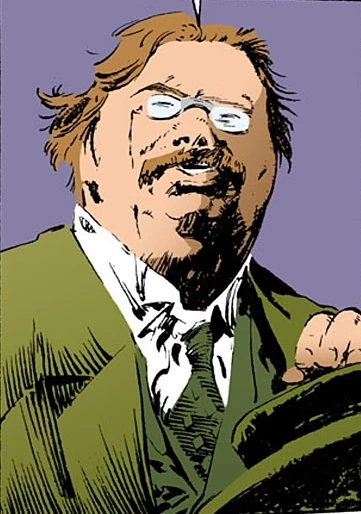
G.K. Chesterton deals with something similar in Orthodoxy. People, and most truths, are constantly between these kinds of paradoxes. Do you ask giants to be small? Do you ask small people to grow into giants? Chesterton would say that giants need to be allowed to be giant, but without hurting people. Small people need to be allowed to be small, but without being petty or worshiping the wrong things.
Man, according to Chesterton, is a broken god. No person can think too much of their souls, because we are made in the image of god, but no person can think too little of themselves either, because we are not living up to it.
All in all though, I think it comes to happiness. The people who are giants and the people who are small that I described do not strike me as happy people. They strike me as people who do not have a good grasp of something (do not have a good grasp of the world). We need a healthy perspective.
