Recently, a study has been released that has generated a bit of media talk. Granted, both of these articles are dated in April, but they just recently found their way into my Facebook newsfeed and I wanted to say something about them.
The articles themselves are easy enough to summarize. Researchers have found a correlation between certain brain changes and marijuana use that were more extreme than is widely expected. In light of the discussions on the legalization on marijuana, some are using this to show how dangerous the drug is and push that it remain illegal (or have more restrictions on it).
That being said, this blog entry will not be about the legal status of pot.
What intrigued me most were the reactions that people had to this study. Some people responded with "Look! Pot is bad! We knew it all along!" Others were saying "These results are exaggerated. And if smoking does not hurt anyone around you, why is it a big deal?" Granted, these are responses that I've heard many times before, but seeing them come up again made me reflect on them.
Let me address both of those of them.
Yes, the results explained by the media article can be exaggerated. The maxim that researches live by, correlation does not prove causation, rings true in this particular situation. To put it simply, just because two things happen at the same time does not mean that one caused the other. A stereotypical example would be how ice cream sales and drowning strongly positively correlate; the higher the ice cream sales, the higher the drowning rate.
If you were trying to make a causal statement out of this correlation, it would sound something like "Buying Ice cream increases the chance of drowning". This makes no sense though, and a little bit of reasoning shows that both of these are correlated because both happen during the Summer (people buy more ice cream and swim more because it's hot).
That being said, the same is true for this study. Does drug use cause the brain to change? Or does a different brain make someone more inclined to use drugs? Based on what we know about drugs, the first is, in my opinion, more likely to be true, but it cannot be proven simply from one correlational study.
Only long-term studies where you have a control group and a group experimented on can help prove that kind of causation. Functionally, you would need to have a group of people who aren't given the drug, a group of people who are given a placebo, and a group of people given the drug and measure changes over time. However, this would be such an unethical study that I find it hard to believe that it could ever be conducted.
Their are a few other holes with the study, such as the small sample size, that need to be addressed for the sake of continuing studies (something the researchers mention in their own article). However, it strikes me that part of this backlash comes from the idea that marijuana is not bad to be used recreationally, a question that no amount of studies can conclusively answer (merely inform).
Let me use some examples to explain this. Cigarettes are known to be bad for you, yet people smoke (like I said, I'm not going to touch the legality of any of these). Video games have been shown to correlate with violence, yet people (including myself) still play video games. Donuts have been shown to correlate with heart failure, but they're just too delicious to pass up.
This study is certainly not the first one about how marijuana affects the brain, and I am tempted to say "no duh". Almost everything we do affects our brains, and it should be obvious that a drug that is used recreationally to alter the brain will have stronger and more lasting affects through extended and increasing use. Similarly, eating donuts will affect my waistline, and the more I do it, the more permanent the change will be.
Granted, I know tragically little about the lasting effects of marijuana. I also know tragically little about the lasting effects of eating donuts. It might be easier for your brain to reshape itself after using marijuana than it is for me to lose weight on a treadmill after a donut binge. However, good sense is that the longer and more frequently that you do something, the harder it is to stop and the more lasting the effects.
Even with that being the case, finding out that information does not tell someone whether or not they SHOULD smoke pot, merely what may happen if they do. I have not found many people who are willing to say that marijuana is always a good thing. Usually, the more sensible argument is that marijuana does not always have to have bad consequences, or that the bad consequences that it does have can be more easily managed than those of other substances.
It's at this point that you have to leave the realm of objective fact and base things on more subjective facts.
Marijuana alters the mind and, as a result, puts people into a state where they MAY (not necessarily will) make decisions that they would not make while sober. Notice, that is not to say that the decisions they make will be any better or worse, merely that they may be different. An angry person who uses pot to relax may be more pleasant to deal with as a result, whereas a lazy person who uses pot to relax further may become kind of obnoxious to be around. These reactions are so subjective though that it is hard to come up with any definite judgement calls.
However, it being subjective does not mean that it is unimportant to talk about. If we care about the people around us, we should know how our actions are affecting them and be sensitive about it.
Something that is not bad to us may be bad for someone around us. If we care about them, we should care about how they are taking it.
I feel like the harder questions to ask are not being asked, which is dangerous. Those who want to condemn marijuana users ignore that life is hard for people and sometimes we need to relax. Or they see marijuana users as ignorant and making poor life choices when, in reality, they put a lot of thought behind how much they should or shouldn't smoke and are attempting to balance it well.
However, I also see marijuana users dismiss the naysayers as being too controlling or sanctimonious, when sometimes they are right. Sometimes people do start doing drugs without knowing all the dangers behind them and sometimes people make bad decisions because they were high.
I see a lot of condemnation on both sides and very little attempts at understanding.
The question, I feel like, is how dangerous of a habit is marijuana. Objective facts can help inform this, but ultimately the decision will come from a combination of subjective and objective information. There are habits that are more dangerous and less dangerous than others and that can change depending on varying objective and subjective degrees.
Let me use a few that I mentioned as an example. Here's a range of danger (in my opinion) of a few habits. From least dangerous to most dangerous
Eating a donut -> Playing video games -> Having a beer -> Playing violent video games -> Eating a lot of donuts -> Having a lot of beer.
I certainly hope some people read this and disagree with it, because they have different experiences with it than I do. My brother comes to mind. As he is more health conscious than I am, I'm sure he would say eating a donut is more dangerous than playing video games.
Yet I also hope that most people who read this understand how each of these things CAN be dangerous. Obesity does not mean that you will have heart problems, but it does mean you are more likely to. Video games do not always make a person violent, but can increase violent tendencies. Drinking does not mean you will make bad choices, but you are more likely to.
I do not think that anyone is foolish enough to think that a drug that alters the brain will never be a bad thing to use. If people can use telling the truth to hurt someone, then clearly even good things can be used wrongly. How much more so is the case for drug abuse.
This is why introspection and conversations are so important. We cannot know by ourselves what is good or bad for us. We get that wrong all the time. Sometimes, we know better than the people around us, but most of the time someone knows the situation better than we do. People should never stop asking questions and wondering if what they are doing is not simply good for themselves but also those around them. Most of the time we will be in the wrong, and it takes a strong character to be able to humbly admit that and change. One which I can only pray that I have.
My advice to both sides would be as follows: there will be hateful people on both sides of the issue. Ignore them and try to find thoughtful yet understanding people on BOTH sides of the issue. Then dialogue.
Because, ultimately, what will always be true is that people are more important than ideas.
This may mean that at some point I will have to eat my words and admit I'm wrong. It may very well be the case that I am hateful, stubborn, and narrow-minded in this regard and have to change. Or it could be the case that I'm not wrong yet am still treating people around me poorly. THESE are the factors that, on a personal level, I find important to consider.
Are we treating each other well, and are we healthy?
Thursday, June 12, 2014

Friday, April 4, 2014
A Trilogy on Size. Part 3: Health and Love.
"One can hardly think too little of one's self. One can hardly think too much of one's soul." - G.K. Chesterton
It's been a long time since I've updated this, so I'm going to briefly summarize Part 1 and Part 2 of this particular trilogy.
Part 1 was about the feelings we get when we are around something huge. Hugeness inspires awe, wonder, and safety. However, bad hugeness can bring about feelings of fear, insignificance, and helplessness. Children's reactions to adults are a good image of this. On the one hand, children look to adults for protection and are often in awe at all a "grown up" can do, but, on the other hand, few things are as horrific an image of distorted power as the adult out to harm the child.
Part 2 was about how we all eventually become huge, be it literally or metaphorically. An unhealthy response to this natural change is desiring that it did not happen, instead pretending like you are still small (or, to put it another way, refusing to put your childish ways behind you). Sometimes we cannot recognize or cope with our "hugeness", but we all grow up eventually.
We all become giants, at least to someone else.
This "growing up" is a tricky balance (one that I hope to have explained by the end of this blog) because there is value in its opposite: condescension (making yourself smaller for the sake of someone else). The parents who are able to lower themselves and play with their children are good parents, and one characteristic of good growth is that teachers who are better than us are willing to help us "on our level". There is a childlike smallness that is good and natural; we are called to be children of God.
Even though my particular struggle has to do with having a lowly view of myself, I wanted to spend some time focusing on its merits. Likewise, I wanted to spend some time on those who go too far in the opposite direction of hugeness and desire power over others.
This bad hugeness is characterized by a desire to dominate, to become so huge and powerful that nothing can hurt us. Commonly, this happens because someone was hurt and wants to make sure that it does not happen again. Sometimes, it just happens because we are puffed up by pride.
One of my favorite comic series illustrates this well. In Irredeemable, the author Mark Waid deals with the question of "What if a person with the powers of Superman could not handle the responsibilities that comes with it?" As a child, this super hero does not know how to handle his strength, so he's constantly hurting people and having them pull away. It is an unfortunate story, because he wants desperately to be a normal child, but his powers make this impossible.
The problem with pretending you're small when you're powerful is your "little" mistakes become much larger.
When the child becomes older, he becomes a superhero and seeks to help people, but he begins to feel the strain of having to be "good all the time". Eventually, he snaps and starts to use his power to do whatever he wants, which usually involves oppressing the "ants". Millions die. Continents are sunk into the ocean. The entire world is condemned to die by slow radiation poisoning within three generations. But this too is a coping mechanism. On a real level, this would not happen if his reckless rage didn't feel good. It's evil. It's wrong. He needs to be stopped. But it made him feel better.
Flaunting power is intoxicating, and you can get drunk off hurting people.

Neglect or cruelty. This is what happens when people use "hugeness" wrong. This is true for love too. The most obvious cases of this are, well, neglect and abuse. But there are subtler ones.
Have you ever met someone who wanted to be worshiped? To be treated as a Savior or a Goddess? I've begun to understand that these are not harmless words. C.S. Lewis says in The Four Loves that love begins to be a demon the moment that love begins to be a god, nothing the distinction between God being love, and love being a god.
How many of us have put our beloved on a pedestal and decided that we would rather do what they want instead of what is right? How many of us have wanted to be put on a pedestal and told that we could do no wrong?
But like I've said, this is tricky. We should sacrifice for those we care about, and we should take the side of those we love. But we shouldn't sacrifice until we become insignificant, and we shouldn't expect people to take our side if we're being cruel.
I think this is where perspective begins to matter. It is our individual perspectives that are skewed toward viewing things as either greater or lesser than they actually are. Children view their parents as giants, and parents know the limitations of their children. This is just a part of nature. Tall people see people smaller than them as short, and short people see those taller than them as tall.
Yet an unrealistic "small" perspective can lead to either seeing others as flawless or, when a flaw is noticed, demonizing these few flaws. Likewise, "giant" perspectives can fall into the trap of either ignoring other's perspectives or putting too much stock into them. Personally, I fall into the vein of hero-worshipers and seeing those around me as giants. My world is a world where any good is heroically good, yet any evil is demonically evil.
However, I've started to try and keep things within their proper proportions.
Some things need to be brought a peg down, while others need to be brought up to snuff. If you have a perspective like mine, it is likely the case that most things you deal with are not as great (or as evil) as you imagine. But this isn't advice for everyone as the opposite can easily be true (even within the same person). I have no doubt that there are a great deal of things that I think too little of. This is why I think it is a matter of perspective and depends on a case-by-case basis.
However, the difficulty lies in determining the right perspective. What is the proper size of a human? How can we measure a man's worth?
G.K. Chesterton deals with something similar in Orthodoxy. People, and most truths, are constantly between these kinds of paradoxes. Do you ask giants to be small? Do you ask small people to grow into giants? Chesterton would say that giants need to be allowed to be giant, but without hurting people. Small people need to be allowed to be small, but without being petty or worshiping the wrong things.
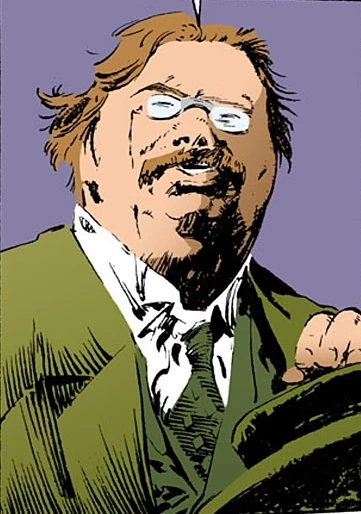
Man, according to Chesterton, is a broken god. No person can think too much of their souls, because we are made in the image of god, but no person can think too little of themselves either, because we are not living up to it.

All in all though, I think it comes to happiness. The people who are giants and the people who are small that I described do not strike me as happy people. They strike me as people who do not have a good grasp of something (do not have a good grasp of the world). We need a healthy perspective.
It's been a long time since I've updated this, so I'm going to briefly summarize Part 1 and Part 2 of this particular trilogy.
Part 1 was about the feelings we get when we are around something huge. Hugeness inspires awe, wonder, and safety. However, bad hugeness can bring about feelings of fear, insignificance, and helplessness. Children's reactions to adults are a good image of this. On the one hand, children look to adults for protection and are often in awe at all a "grown up" can do, but, on the other hand, few things are as horrific an image of distorted power as the adult out to harm the child.
Part 2 was about how we all eventually become huge, be it literally or metaphorically. An unhealthy response to this natural change is desiring that it did not happen, instead pretending like you are still small (or, to put it another way, refusing to put your childish ways behind you). Sometimes we cannot recognize or cope with our "hugeness", but we all grow up eventually.
We all become giants, at least to someone else.
This "growing up" is a tricky balance (one that I hope to have explained by the end of this blog) because there is value in its opposite: condescension (making yourself smaller for the sake of someone else). The parents who are able to lower themselves and play with their children are good parents, and one characteristic of good growth is that teachers who are better than us are willing to help us "on our level". There is a childlike smallness that is good and natural; we are called to be children of God.
Even though my particular struggle has to do with having a lowly view of myself, I wanted to spend some time focusing on its merits. Likewise, I wanted to spend some time on those who go too far in the opposite direction of hugeness and desire power over others.
This bad hugeness is characterized by a desire to dominate, to become so huge and powerful that nothing can hurt us. Commonly, this happens because someone was hurt and wants to make sure that it does not happen again. Sometimes, it just happens because we are puffed up by pride.
One of my favorite comic series illustrates this well. In Irredeemable, the author Mark Waid deals with the question of "What if a person with the powers of Superman could not handle the responsibilities that comes with it?" As a child, this super hero does not know how to handle his strength, so he's constantly hurting people and having them pull away. It is an unfortunate story, because he wants desperately to be a normal child, but his powers make this impossible.
The problem with pretending you're small when you're powerful is your "little" mistakes become much larger.
When the child becomes older, he becomes a superhero and seeks to help people, but he begins to feel the strain of having to be "good all the time". Eventually, he snaps and starts to use his power to do whatever he wants, which usually involves oppressing the "ants". Millions die. Continents are sunk into the ocean. The entire world is condemned to die by slow radiation poisoning within three generations. But this too is a coping mechanism. On a real level, this would not happen if his reckless rage didn't feel good. It's evil. It's wrong. He needs to be stopped. But it made him feel better.
Flaunting power is intoxicating, and you can get drunk off hurting people.

Neglect or cruelty. This is what happens when people use "hugeness" wrong. This is true for love too. The most obvious cases of this are, well, neglect and abuse. But there are subtler ones.
Have you ever met someone who wanted to be worshiped? To be treated as a Savior or a Goddess? I've begun to understand that these are not harmless words. C.S. Lewis says in The Four Loves that love begins to be a demon the moment that love begins to be a god, nothing the distinction between God being love, and love being a god.
How many of us have put our beloved on a pedestal and decided that we would rather do what they want instead of what is right? How many of us have wanted to be put on a pedestal and told that we could do no wrong?
But like I've said, this is tricky. We should sacrifice for those we care about, and we should take the side of those we love. But we shouldn't sacrifice until we become insignificant, and we shouldn't expect people to take our side if we're being cruel.
I think this is where perspective begins to matter. It is our individual perspectives that are skewed toward viewing things as either greater or lesser than they actually are. Children view their parents as giants, and parents know the limitations of their children. This is just a part of nature. Tall people see people smaller than them as short, and short people see those taller than them as tall.
Yet an unrealistic "small" perspective can lead to either seeing others as flawless or, when a flaw is noticed, demonizing these few flaws. Likewise, "giant" perspectives can fall into the trap of either ignoring other's perspectives or putting too much stock into them. Personally, I fall into the vein of hero-worshipers and seeing those around me as giants. My world is a world where any good is heroically good, yet any evil is demonically evil.
However, I've started to try and keep things within their proper proportions.
Some things need to be brought a peg down, while others need to be brought up to snuff. If you have a perspective like mine, it is likely the case that most things you deal with are not as great (or as evil) as you imagine. But this isn't advice for everyone as the opposite can easily be true (even within the same person). I have no doubt that there are a great deal of things that I think too little of. This is why I think it is a matter of perspective and depends on a case-by-case basis.
However, the difficulty lies in determining the right perspective. What is the proper size of a human? How can we measure a man's worth?
G.K. Chesterton deals with something similar in Orthodoxy. People, and most truths, are constantly between these kinds of paradoxes. Do you ask giants to be small? Do you ask small people to grow into giants? Chesterton would say that giants need to be allowed to be giant, but without hurting people. Small people need to be allowed to be small, but without being petty or worshiping the wrong things.
Man, according to Chesterton, is a broken god. No person can think too much of their souls, because we are made in the image of god, but no person can think too little of themselves either, because we are not living up to it.
All in all though, I think it comes to happiness. The people who are giants and the people who are small that I described do not strike me as happy people. They strike me as people who do not have a good grasp of something (do not have a good grasp of the world). We need a healthy perspective.
Subscribe to:
Comments (Atom)